This is a SEO version of Zero-01. Click here to view full version
« Previous Page Table of Contents Next Page »www.latinaero.com
revista Latinaero
I
n the wake of the frst French and US strikes on Libyan governmental targets on 19 March 2011, after eleven days of intense air operations over Libya, the UN-ordered coalition was placed under NATO command in preparation of a longer campaign than thought initially.
On 28 March, the United Nations had seen no evidence of a ceasefre in Libya or of any steps by the country’s authorities to fulfl their obligations under Security Council resolutions aimed at protecting civilians in the strife-torn North African country, and Secretary-General Ban Ki-moon expressed serious concerns about the protection of civilians and respect for human rights and international humanitarian law in Libya. Mr. Ban told Member States during an informal closed meeting of the General Assembly, which he briefed on his recent travels: “I call, once again, for full respect for international humanitarian law and human rights by all those involved in the fghting.” This was not echoed in Tripoli…
Under UN Resolution 1973
Let’s recall that on 10 March 2011 the UN Security Council adopted a resolution authorising Member States to take “all necessary measures” to protect civilians in Libya. And since the early US, French and British involvement several newcomer countries have carried out air strikes or air patrols as part of their eforts to help implement the UN resolution. By the end of March, Mr. Ban told the General Assembly that there were recurrent reports that opposition groups
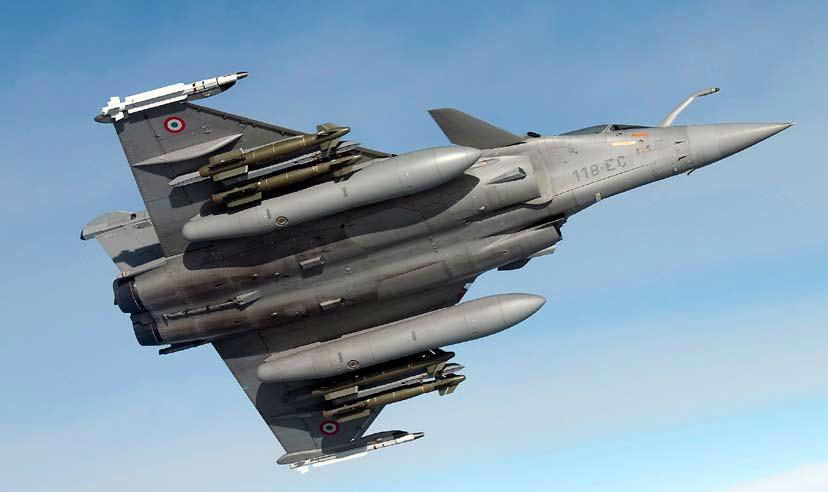
” 20 de Março de 2011, um Dassault Rafale C da Força Aérea Francesa, pertencente ao esquadrão EC/330 “Côte d’Argent”, que seguia em direção ao espaço aéreo da Líbia é visto aqui armado com quatro bombas Sagem AASM de 250 kg e um par de mísseis MBDA Mica IR. 20 March 2011, a French Air Force Dassault Rafale C from squadron EC 1/330 “Côte d’Argent” headed for Libyan air space is seen armed with four Sagem 250-kg AASM rocket-bombs and a pair of MBDA Mica IR all aspect air-to-air missiles for self-protection. © EMACOM
In the early spring of 2011, after over two weeks of intense air operations over Libya, the coalition led by the major NATO military powers—the USA, Britain and France—mustered enough resources in the air and at sea to continue carrying out its air interdiction mission under UN resolution 1973. All this on a steady tempo in protection of advancing anti-Kadhafi Libyan forces. However European air forces were then still struggling to put more hardware in place to make up for a partial US military pull-out, once NATO take-over of all the tactical responsibility of the UN-backed military operation is complete.
UN air interdiction operations over Libya
This is a SEO version of Zero-01. Click here to view full version
« Previous Page Table of Contents Next Page »